How to Care for an Oil Painting on Canvas: A Guide for Collectors
Acquiring an original painting is a significant event. But when the canvas is finally delivered, many wonder: how do you handle the artwork properly without damaging it? High-quality linen and oil paints are living materials that are highly sensitive to their environment.
In this article, I have gathered all the essential rules for caring for an oil painting: from the first minutes of unboxing to the long-term preservation of the work.
Meeting the Painting: Unboxing and Canvas Adaptation
A long flight, a change of climate, and transportation cause stress for a painting, requiring careful adaptation. To make this transition safe, follow these steps during the first hours after delivery.
1. Acclimatization: Give the Artwork Time
If the painting arrives during the colder months, from a different climate zone, or after a long flight, do not rush to open the packaging. Sudden temperature changes are the main enemy of oil paintings. They can cause condensation or micro-cracks in the paint layer. Simply leave the unopened package in the room for at least 24 hours. Let the temperature inside the packaging equalize with your home's temperature naturally.
2. Safe Unboxing
I pay maximum attention to safety when shipping artworks. Paintings travel in wooden crates, rigid boxes, or heavy-duty PVC tubes. When cutting through the protective layers with a utility knife, be extremely careful. Do not insert the blade too deeply; make light cuts only along the packing tape line to avoid accidentally slicing the protective film and the canvas itself.
3. Gentle Removal from the Tube
Only take the canvas out of the tube after it has acclimatized – cold oil paint is brittle and can crack when unrolled. If the painting was shipped unstretched and arrived in a roll, do not try to pull it out by force by tugging the edge. First, remove the caps from both ends of the tube. Then, gently twist the rolled canvas inside and push it forward so that it slides out smoothly from the opposite side. Under no circumstances should you pull the canvas toward yourself – this can deform the linen weave or damage the paint layer.
4. First Hours of Freedom
A canvas that has spent several weeks rolled up needs time to "exhale" and remember its geometry. The ideal scenario is to hand the work over, still in its tube, to a professional framer where specialists will carefully unroll it themselves.
If you decide to unroll the canvas at home, lay it out on a flat, clean, and dry surface face up for about 4–5 hours. Do not attempt to aggressively flatten the edges by weighing them down with heavy objects – the natural linen will relax and the canvas will settle on its own.

Framing an Oil Painting on Canvas: Frames, Stretchers, and Glass
If the painting arrived rolled, the next step is stretching it onto a stretcher bar and, if desired, choosing a frame. Framing an original painting is not just a technical process; it is a way to protect the artwork and emphasize its depth without overshadowing its essence.
1. Choosing a Framer
Entrust the artwork only to professional framing studios that specialize in conservation (museum-quality) framing. An original oil painting on linen requires an understanding of the materials. Ensure the framers have experience with canvases and understand how critical it is to handle the paint layer delicately.
2. The Right Stretcher Bar
The stretcher bar is the "skeleton" of the painting. It must be made from high-quality, well-dried wood so that it doesn't warp from humidity changes. A good stretcher must also have a raised lip (bevel) so that the canvas does not touch the inner flat surface of the wood – this will protect the paint from creases and cracks over time. Choose a stretcher with corner keys: if the canvas ever loosens with changes in humidity, a framer can gently tap the keys to restore its tension.
3. Do You Need a Frame?
Framing is strictly a matter of taste; you can confidently hang the painting without one. If you decide to use a frame, remember: it serves only as a boundary between the space of the painting and your interior. For contemporary canvases, minimalist frames like a floating frame work perfectly. In this type of framing, a small gap is left between the canvas and the frame, creating the illusion that the painting is floating. This is not only aesthetically pleasing but also practical: the frame protects the edges of the canvas from accidental impacts.
4. Why Oil Doesn't Need Glass
Unlike works on paper or watercolors, oil paintings need to "breathe". Traditionally, oil paintings are not placed under glass. Glass can trap moisture against the paint layer, and it also causes reflections that interfere with the perception of the texture and volume of the brushstrokes. If conditions require maximum protection, discuss using exclusively museum-quality (anti-reflective and UV-protective) glass with your framer. It must be installed with a spacer so that the glass never touches the surface of the canvas.
Finding the Perfect Spot: Where to Hang an Oil Painting
Choosing a location for a painting is not just an interior design choice; it is about creating a safe environment. Linen and oil are highly responsive to your home's microclimate.
1. Lighting: Light That Doesn't Harm
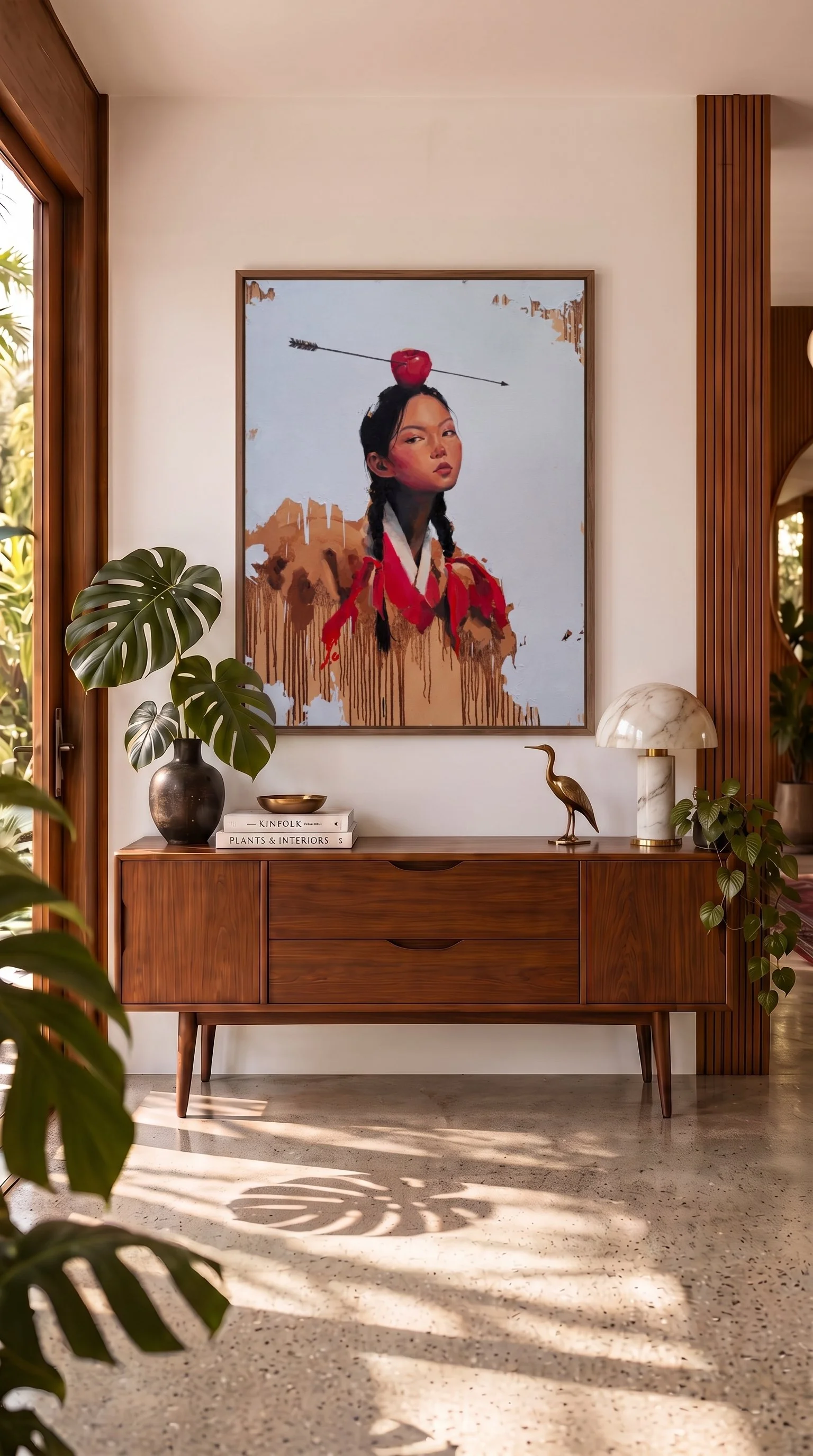
Direct sunlight is the worst enemy of a painting. Ultraviolet light breaks down pigments, and constant heating dries out the oil. The ideal light for paintings is diffused daylight or specialized artificial lighting. If you use spotlights, choose LED bulbs: they emit very little heat and almost no UV.
2. Temperature and Humidity
Sudden changes in temperature and humidity cause the canvas to constantly expand and contract. Over time, this internal tension can lead to craquelure (a network of fine cracks in the paint). Maintain a stable temperature and a consistent humidity level in the room – ideally 18–24°C with relative humidity around 40–60%.
3. "Danger" Zones: Where Not to Hang a Painting
Rule out areas with extreme microclimates. I strongly advise against hanging original paintings in the kitchen (due to steam and grease particles) or in bathrooms. Also, avoid walls directly above heating radiators, working fireplaces, and spots in the direct path of air conditioning airflow.
4. Vibrations and Drafts
Constant strong drafts or vibrations from heavy slamming doors can negatively affect the canvas's tension. A painting requires stillness – choose quiet walls.
Everyday Care for Paintings: Dust and Varnishing
Caring for a painting comes down to minimal rituals. The main rule is gentleness and avoiding any aggressive impact.
1. Rules for Moving and Touching
When moving the artwork, always handle it only by the frame or the sturdy wooden stretcher. Be sure to wash and dry your hands beforehand. Never press your fingers into the canvas, and try to avoid touching the paint layer itself.
2. Gentle Dust Removal
Forget about wet wipes, sponges, and household cleaners. To remove dust, use only a dry, wide, and very soft brush with natural bristles. Dust with light sweeping motions without pressing into the canvas.
3. Protective Layer and Final Varnish
I coat all my paintings with a retouch varnish within a few weeks of completion. This thin layer protects the paint during the initial drying period. However, oil paintings dry slowly, and the final varnish can only be applied once the paint has fully cured. My recommendation is to have a final picture varnish applied about a year after the painting was created, at a professional framing or restoration studio. It will create a final barrier against dust and secure the artwork's depth for years to come. If you're not sure when your painting was finished, just ask me.
Documentation: The Certificate of Authenticity
An original painting is not just a visual addition to an interior. It is an artifact that over time becomes part of your personal history.
1. Documentation and Provenance
With each painting, you receive a Certificate of Authenticity. This is the artwork's passport, confirming its authorship, year of creation, materials, and original title. The certificate establishes provenance – the history of ownership. If you ever decide to pass the artwork on, the original certificate is the key document confirming its origin.
2. Caring for the Future
A painting outlives the moment it was bought. Keeping the canvas in good condition and the certificate in a safe place means the work can be passed on – to family, to another collection – with its full history intact.
In Conclusion
After walking through all these rules, I want to say the most important thing: please do not be afraid of the painting. Oil paintings demand respect for the materials, but they are created to bring new meanings and depth to your home. Let the canvas live alongside you and become a natural part of your space. Art is a dialogue, and it should be comfortable.
If you have any questions about care or framing in the future, you can always write to me directly. I remain connected with each of my artworks and with every person who has given them a new home.
You can explore my new paintings, dive into the meanings embedded in them, and find an artwork for your collection in the Work section.
