Apple Day is younger than I am. It was invented in Korea in 2002, when a civic council against school violence chose a date – 24 October. In Korean, 'apple' and 'apology' sound exactly the same: sagwa. The date was picked for its sound as well: read aloud in Korean, 2 and 4 make 'the two of us apologise'. In that first year, the council planned to take the apologies of the first 1024 people who wrote one on its website to the people they were meant for, each with an apple. 1024 – the same date again, written the Korean way, month first. It is an ordinary story about language trying to reconcile people where there isn't enough air for an honest conversation.
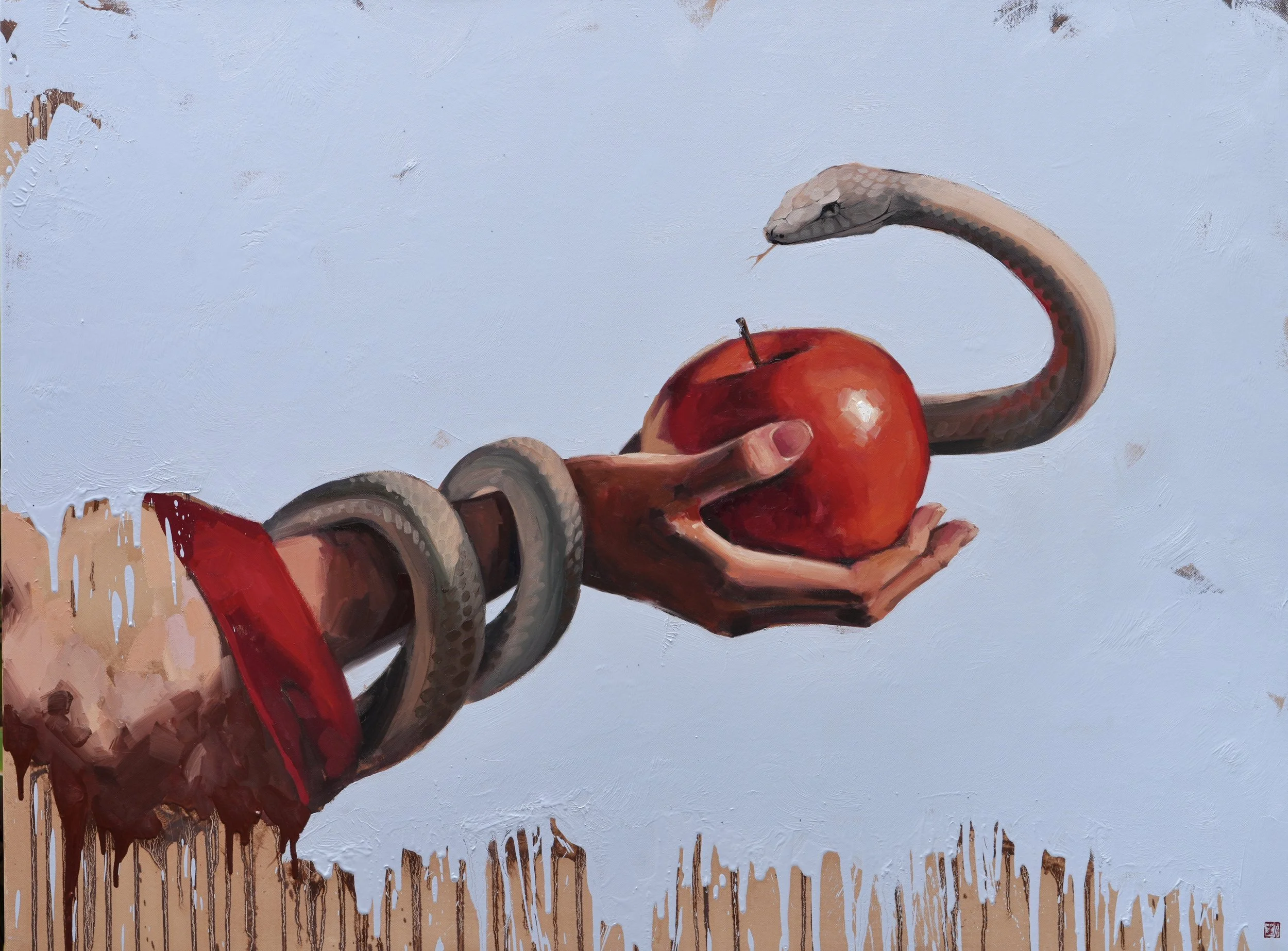
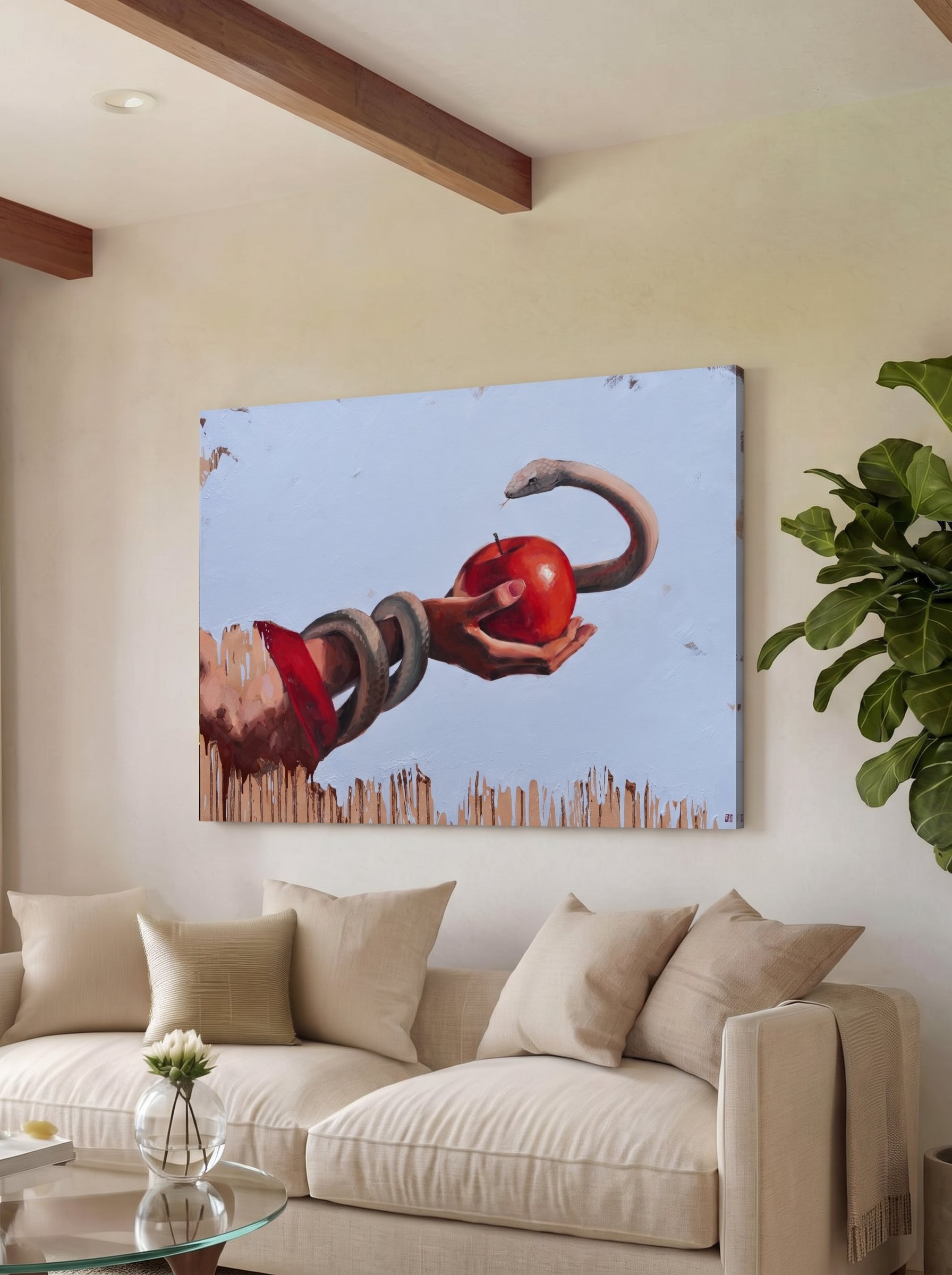
In Korean, the words for "apple" and "apology" sound the same – sagwa. Out of that coincidence grew a custom: you give an apple when saying it out loud is too hard. In a Korean home, the snake is Eopsin – a guardian spirit you put up with and are afraid to drive away.
A silent apology to your own keeper. Not for a wrongdoing, but for the mere attempt to choose your own path. Strange, asking forgiveness of the one who was supposed to keep you safe.
From the series Keepers
Oil on linen canvas, 2026
90 × 120 × 5 cm
Original painting, signed. One of a kind.
All prices are in USD.
In an old Korean house, you didn't drive out a snake that had crawled inside. Eopsin is the spirit of the storeroom and of the household's wealth. Most often it took the form of a rat snake, less often a weasel or a toad; people told of a black snake with ears. When it appeared, no one touched it or chased it away. They feared one thing above all: if Eopsin left, the wealth would leave with it, and the household would fall into ruin. So they did what they could to keep it. They set out a jar of grain under straw for it, added new grain and a fresh layer of straw every autumn after the harvest, and prayed for it to stay close.
Sagwa is the first painting in my series Keepers. The series grew out of two of my tiger paintings – Horangi and Sanctuary.
When you live between two cultures, at some point you start building your own safety. There is no natural refuge, because wherever you are, you remain a bit of an outsider. So in come hyper-responsibility, control, perfectionism and constant anxiety. You set keepers around yourself to guard everything that is alive and vulnerable. But time passes, and the keeper quietly turns into a jailer. At some point you can no longer tell whether it is keeping the danger out or keeping you in.
And when the light in the room goes out, all that's left is to listen, in the silence, to someone walking the perimeter out of habit.