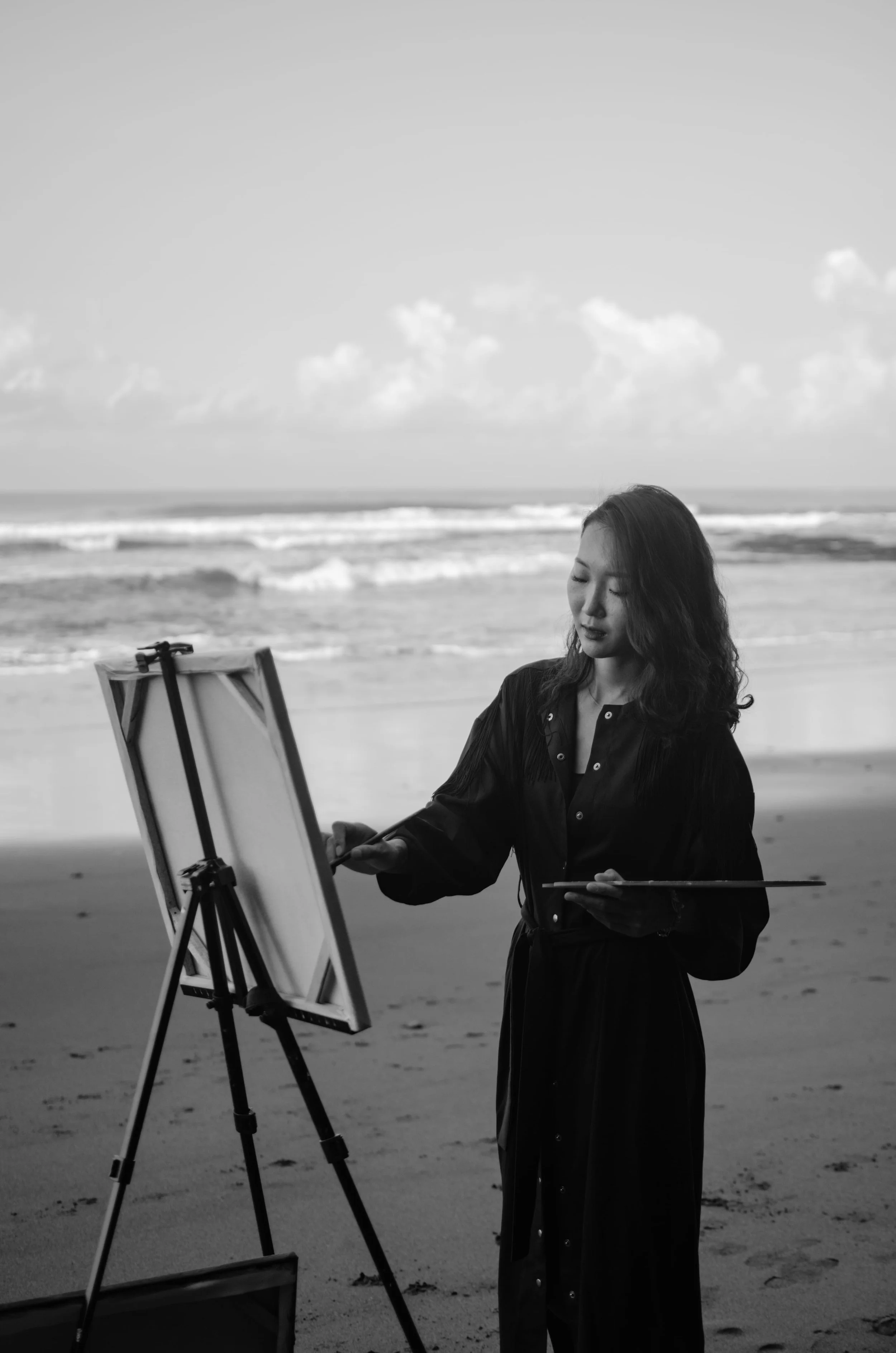
How my visual language is formed
The ability to see isn't an innate gift or sheer luck. It's a lens we fine-tune over the years. A personal signature in contemporary art doesn't emerge from a void or from endlessly scrolling through other people's work. It crystallizes through daily choices: what we notice, what we save, and what we return to.
My practice is built on exactly these principles. I want to break down the mechanisms that help me shape this internal compass – not as a set of rules, but as a look inside my own studio.
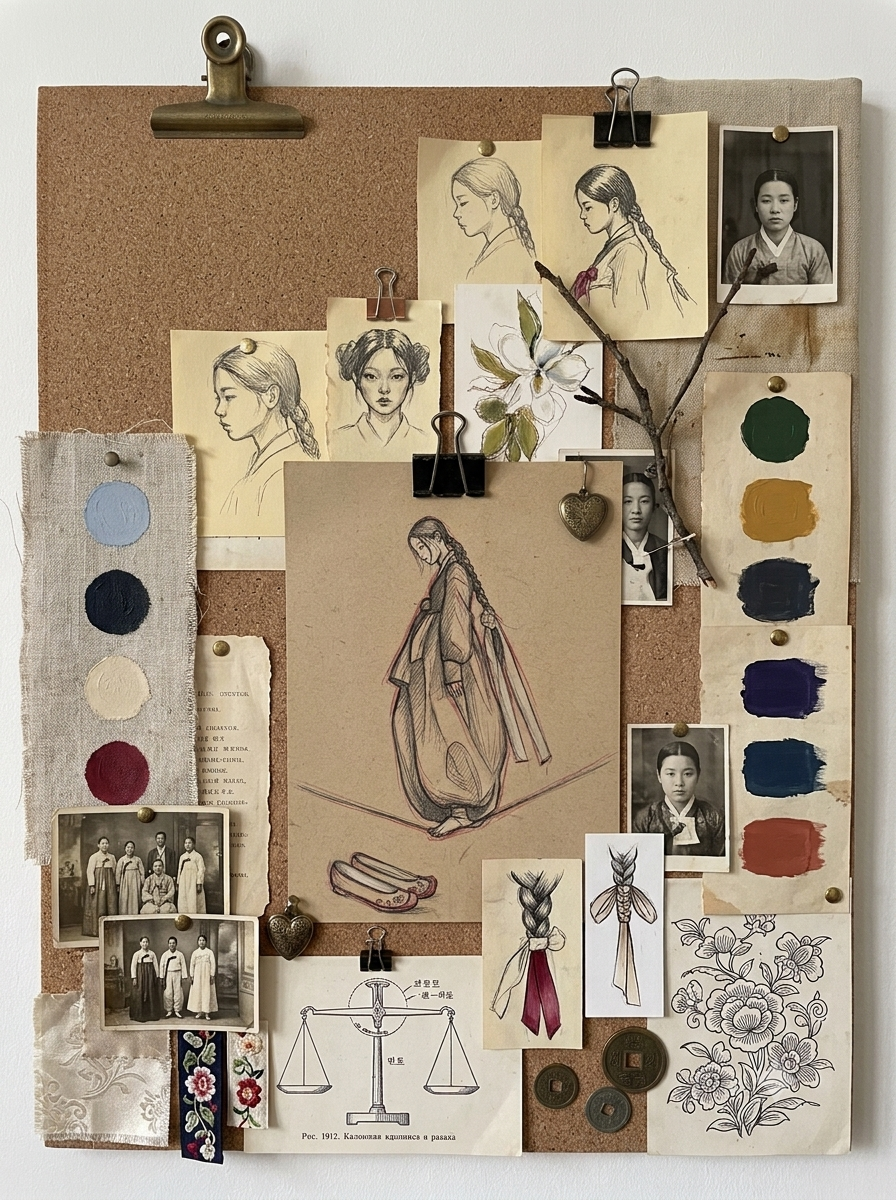
A living archive and the right to repeat
I am a highly structured person, so anything that catches my eye goes straight into an archive. This isn't a moodboard for a specific task; it's a database of my visual reactions. But the main secret of an archive is that you can't just let things accumulate. You have to return to them.
When you look back through what you've gathered every few months, you suddenly notice unobvious connections. The same textures, a specific kind of light, or complex patches of color keep surfacing time and again. That's how I begin to see more clearly what truly moves me. For instance, the collision of rigid form and absolute vulnerability – themes that formed the foundation of my graphic series The In-Between. These repetitions in saved images aren't a coincidence; they are the voice of visual intelligence. They tell me where I need to look.
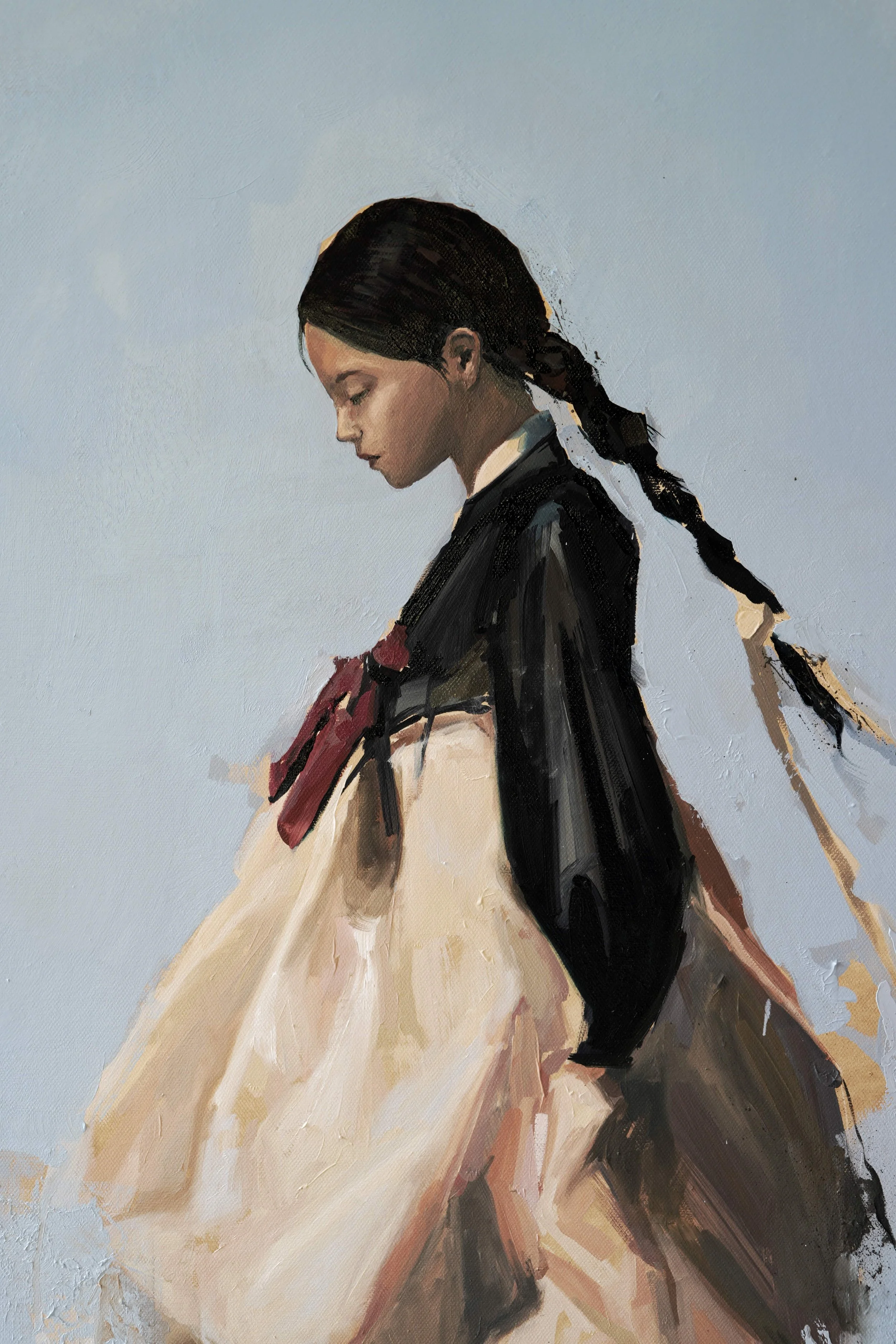
Text as a developer
Just saving an image has never been enough for me. Next to a visual, there is often text. I note for myself: why did this fragment make me stop? What exactly is working here? Where does this specific feeling of anxiety, or conversely, equilibrium, come from? Writing brings into the light what the eye registered unconsciously. Until a thought takes the form of words, it remains a fragile impulse. Once translated into text, it becomes a solid foundation for new paintings.
Invisible sources and the anatomy of cinema
The strongest ideas rarely come from painting itself. If you rely solely on the canvases of other artists, you end up with a derivative product. My resource lies in adjacent territories.
I often watch films like a researcher, breaking scenes down into components: how the light is set, how the emptiness between characters creates tension, how the rhythm works. Inspiration for new paintings can come from anywhere: brutalist architecture, a random dialogue on the street, the rhythm of the ocean, or the texture of old wood. It is exactly the unexpected intersection of seemingly incompatible things that strikes the spark from which something new is born.
A personal alphabet
Each of us has our own cultural and symbolic code. It’s a collection of artifacts, experiences, music, books, and places that have reshaped us. As I wrote in the story about myself, my personal alphabet is deeply multi-layered: it holds the complex history of my family, the Russian language I think in, the taste of traditional Korean food from my childhood, my constant moving around the world, and the Asian environment I live in now.
No one in the world has exactly the same set of source data. Understanding this code gives you the freedom to stop trying to be someone else, and instead explore the unique point where only you stand.
The honesty test
Ultimately, all this visual experience passes through one strict filter. Sometimes I ask myself: would I paint this canvas exactly this way if I knew no one would ever see it?
This question ruthlessly cuts away social expectations, attempts to fit into trends, or the urge to seem like someone else. What remains on the canvas after this check is the very essence. My true taste. And that is the only thing truly worth relying on.