On mountain trails in Korea you often come across doltap – stone towers built without mortar. Someone walking through the forest picks up a random stone from the ground, makes a wish and sets it on top of the others. Then they walk on.
The next passer-by does the same. Stone settles on stone. Sharp edges catch on uneven surfaces. The whole thing is held up by gravity alone. One wrong move, one stone that's too heavy – and it all comes down. But they stand. No one knows who laid the first stone. No one knows whose wish is at the very bottom.
The best-known towers stand at Tapsa Temple, at the foot of Maisan Mountain. More than eighty of them survive, and all were stacked by one hermit, Yi Gap-yong, over some thirty years. But an ordinary doltap by the trail is never built by one person alone.
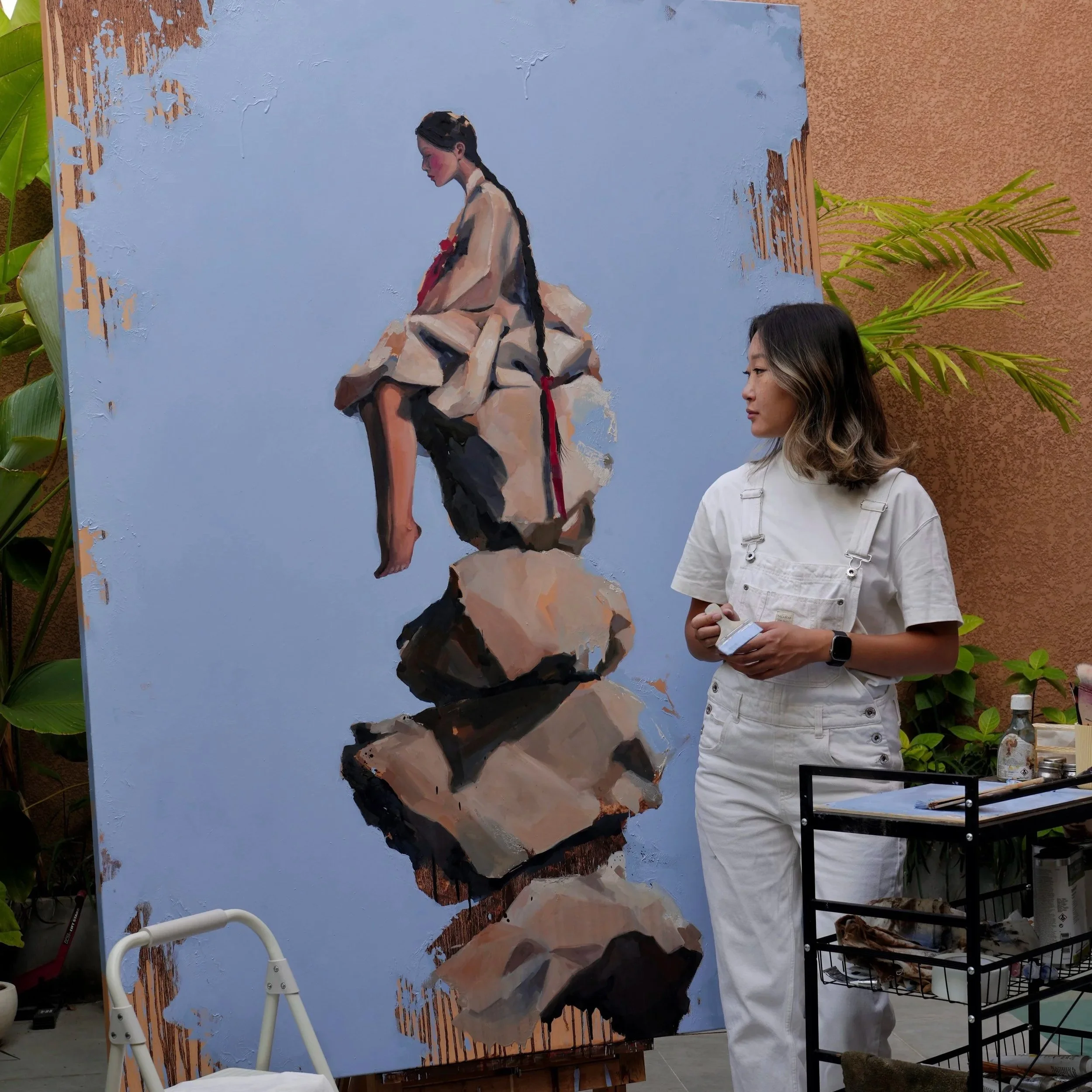
In English, a stack of stones like this is called a cairn. It's also the title of my painting.
The stones we didn't choose
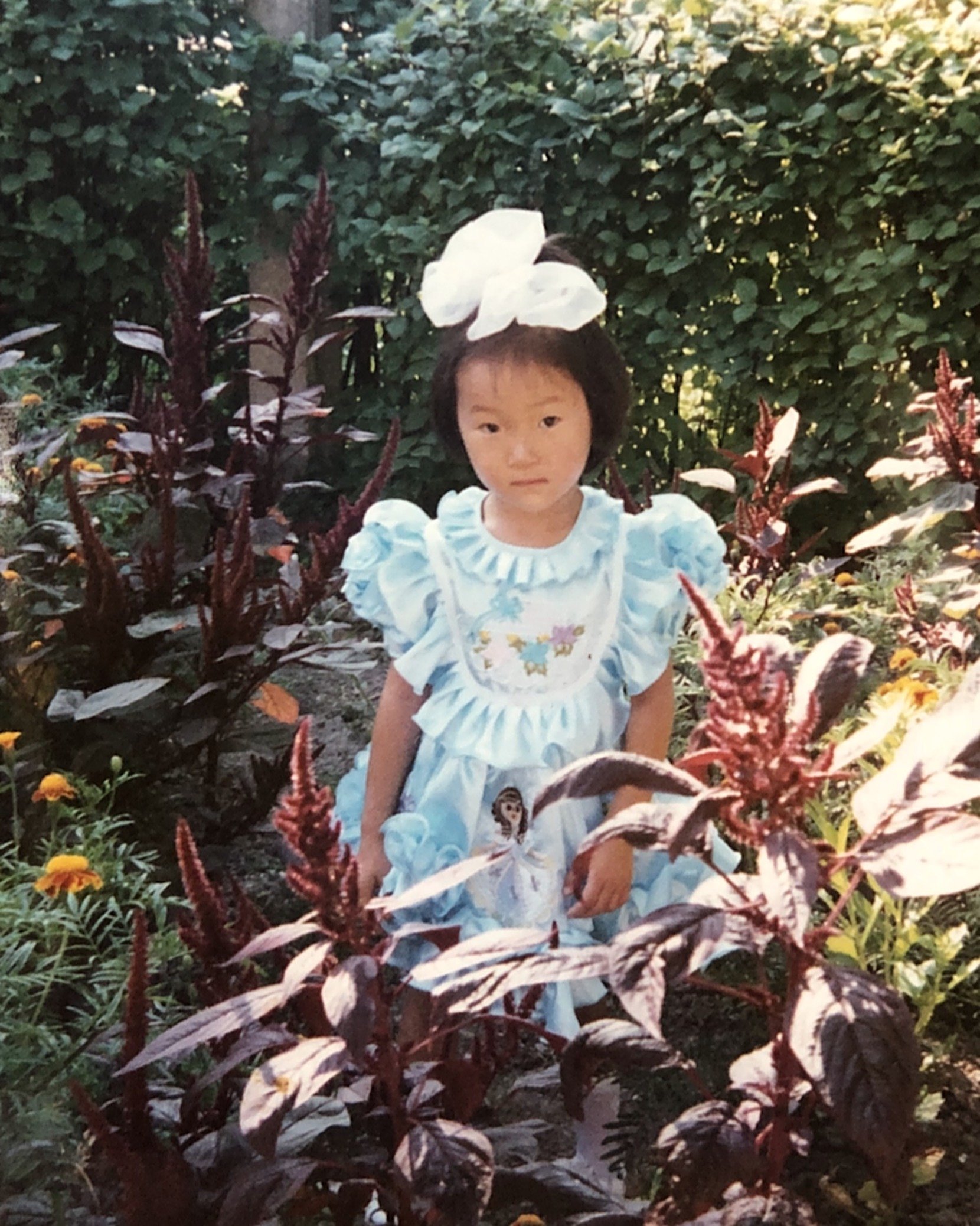
I'm Koryo-saram. I was born and raised in Russia, in Maysky, a small town in the Caucasus, and later lived in Korea for five years. I have a Korean face, but I think and dream in Russian.
In Russia I always drew attention. My looks made me seem like an outsider, though I was entirely local. In Korea it was the other way round. In the crowds on Korean streets I finally blended in. Right up until I opened my mouth. In Korea, the foreign part was on the inside: my Russian way of thinking broke the facade.
From childhood, my normal was made of contradictions. I was the only Korean girl at school who stood on stage in a Russian folk dress and a kokoshnik headdress. I sang chastushki – short, cheeky folk songs. I was so ashamed.
Things like these reach us before we're even aware of ourselves. A face, a language. You chose none of it. Someone came along and laid that stone in your foundation.
Then more get added. We carry our parents' fears and social habits. My family laid a firm belief in me: you can only rely on yourself. No one will help. For years I carried it as my own. As I got older, it turned out that asking for help is normal. But that stone was already inside. Every passer-by in our lives leaves a mark. Often with good intentions. It's just that the wish isn't always about us.
Without mortar
We're taught to build ourselves. To cut away what's unnecessary, find a solid load-bearing structure and pour the concrete of confidence over it. Not a single crack.
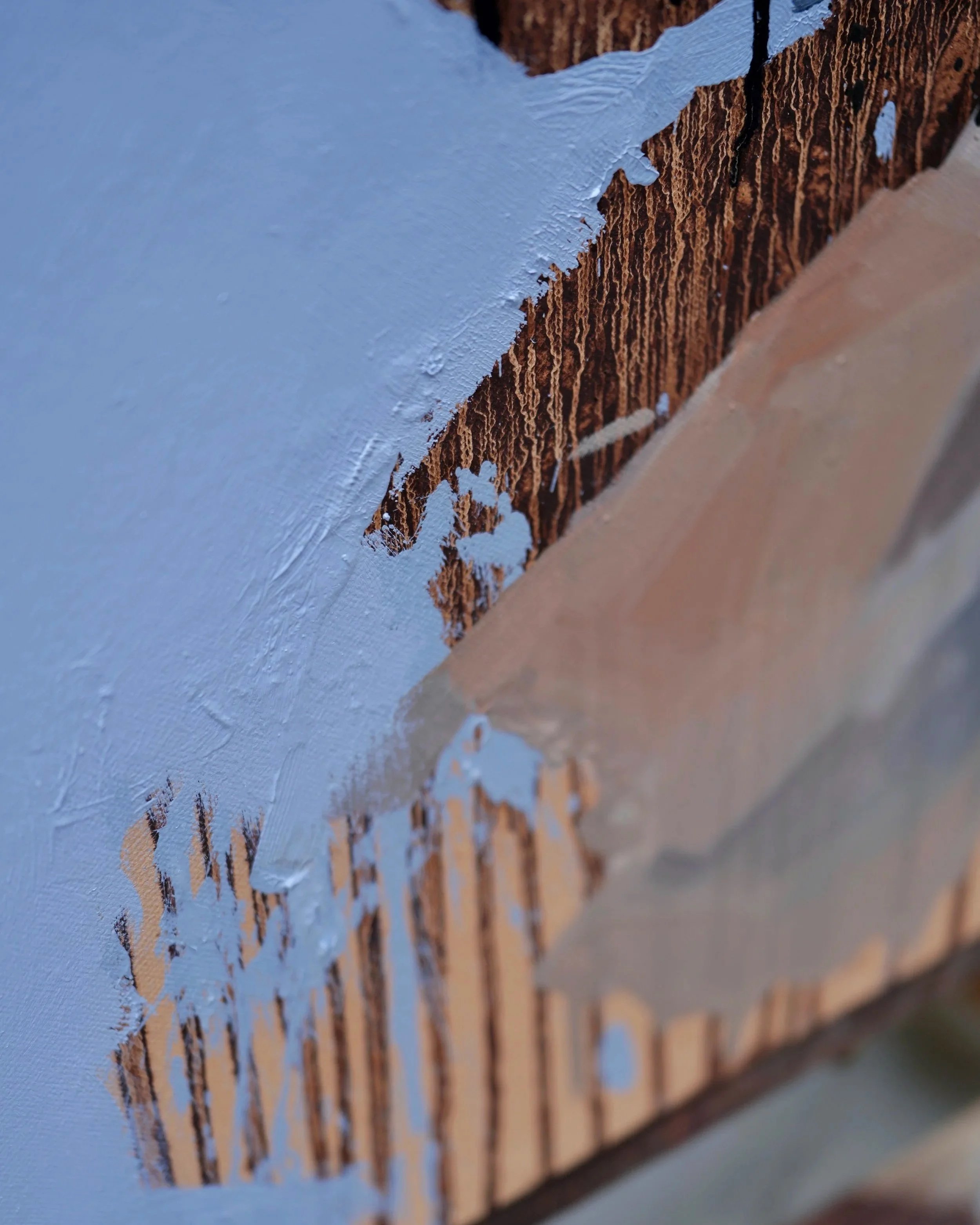
While I was painting Cairn, I thought a lot about how we hold all that weight. The canvas is large – 200 by 150 centimetres. Oil lies heavy on linen. The stones didn't work at first: I repainted them almost entirely, twice. The bottom stone was the hardest. I had to give it enough weight to hold everything above it, and still keep the random drips of the imprimatura.
All my work rests on opposites that don't need reconciling. Both truths exist at once. I am Russian and Korean.
We're put together the same way. There's no cement in us, no single right answer that would bind all the paradoxes together for good.
Sometimes the balance tips. It feels as if there are too many other people's stones. You want to throw it all off and start again, keeping only what you consciously chose. But that's impossible. What's given can't be undone. Your face stays yours.
Where it all comes together
A doltap has no minor stones. Take one uneven shard out of the middle – and the tower leans.
My inner doltap is made of Russia and Korea. Of oil and linen. Of hyper-responsibility and just as much laziness.
They don't need gluing. You're not the author of this stack. But you are the only place where all these stones finally rest together.
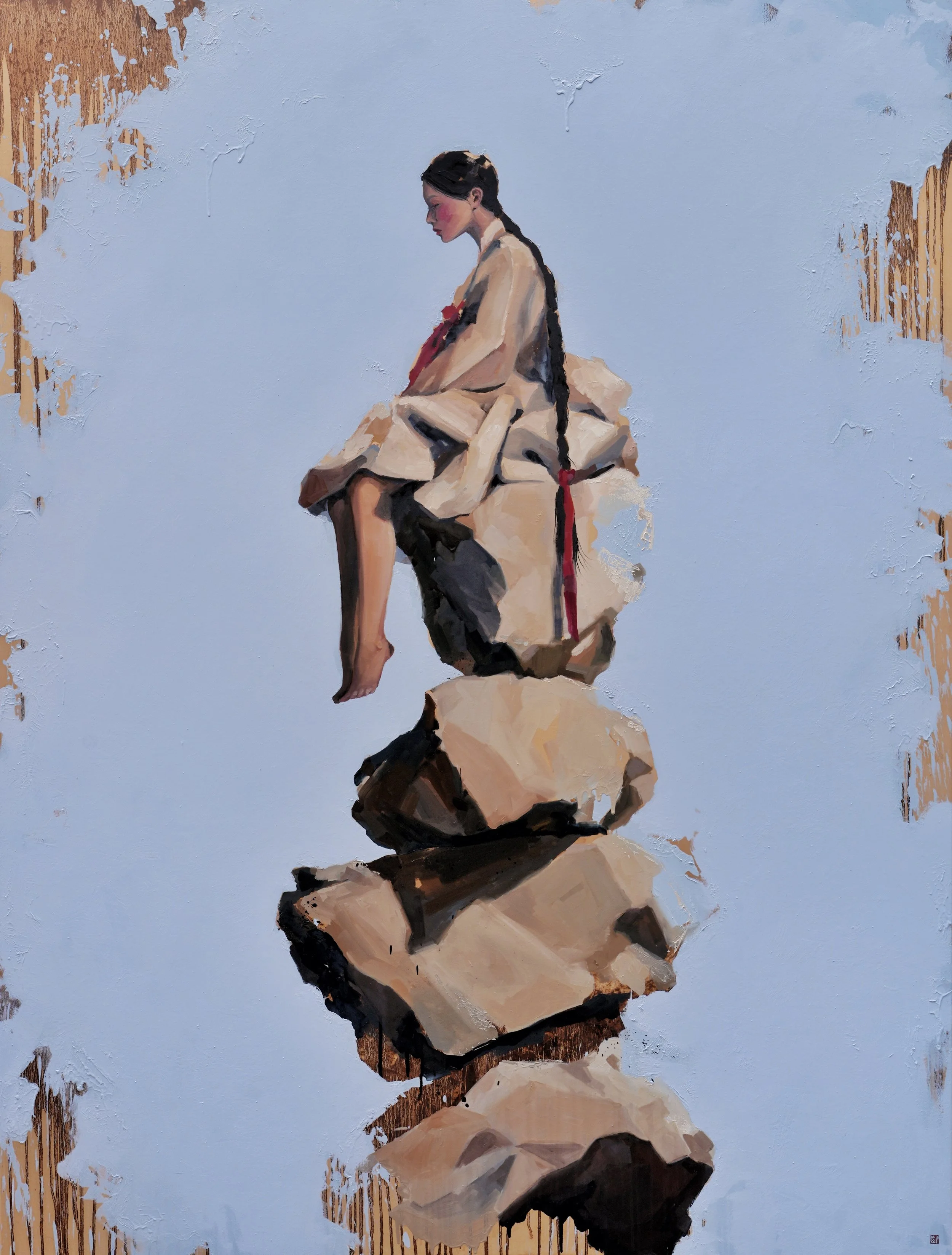
A cairn is a stack of stones with no mortar. It's built as a trail marker, as a memory. In Korea – as a doltap, a stone tower where every stone is laid with a wish. No one builds it whole: each passerby adds a stone and moves on, never knowing who placed the one below or who will place the next.
A person is built the same way. Someone laid down a language, someone a fear, someone the habit of keeping your back straight. Each with a wish of their own, and not always about you. There's no mortar: it all holds only through balance, and no one guarantees it. You are not the author of this stack. But you are the only place where all these stones finally rest together. And somewhere, you've already laid one of yours in someone else's.
From the series Given
Oil on linen canvas, 2026
200 × 150 × 5 cm
Original painting, signed. One of a kind.
All prices are in USD.
